




Products
Afzir Company offers you a wide range of GFRP rebars for many applications including retrofitting projects.
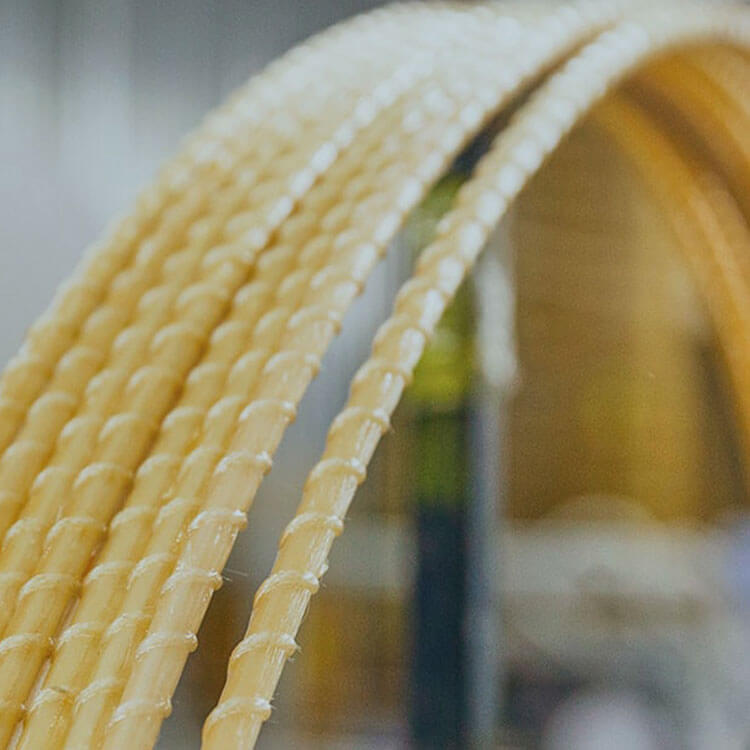
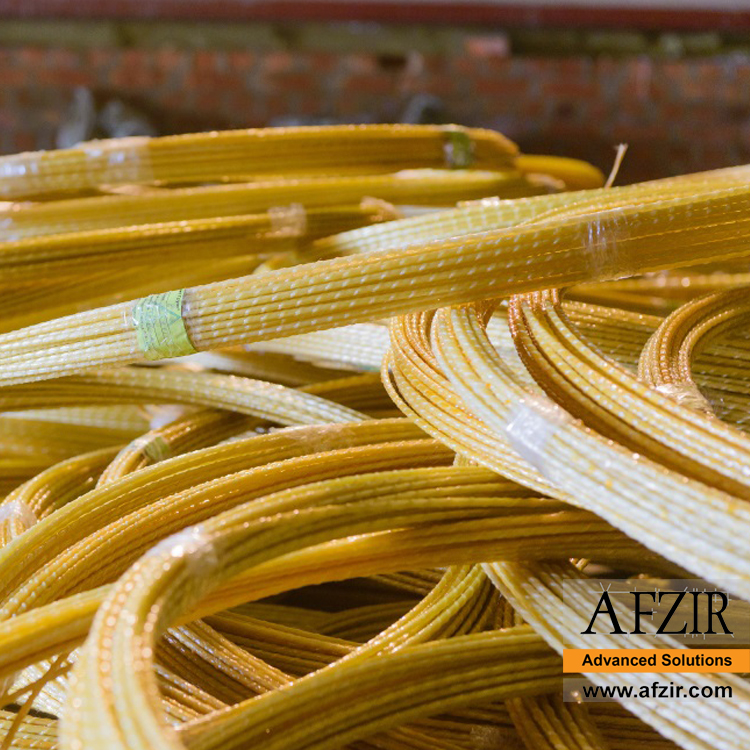
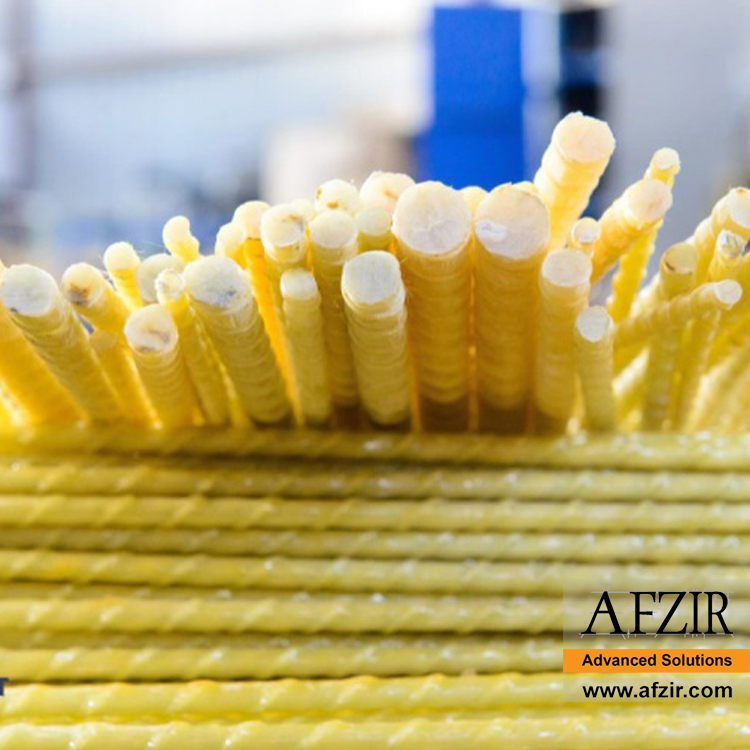
Glass ribbed rebars are composite materials made from a combination of glass fibers and polyester polymer resin. GRR glass ribbed rebars, like steel reinforcement as a concrete reinforcement, provide additional strength and hardness to concrete and even other materials such as matrices.
As it is non-corrosive, it could be an alternative to steel in concrete reinforcement. FRP Rebar is suitable for a wide range of structural or architectural application and can be used everywhere a material that is corrosion resistant, lightweight, or non-conductive is required.
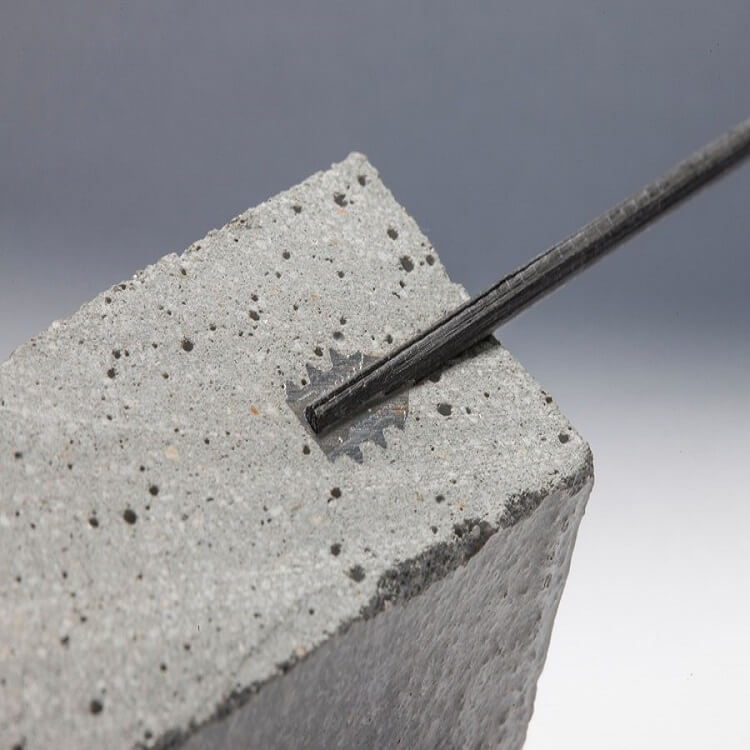
GRR glass rebar is also used as a strength component in the well-known NSM technique. This rugged system consists of FRP rebars enclosed in a groove created in the member surface. In this way, these rebars are placed in the created grooves, using Afzir high-strength thixotropic epoxy resin and adhesive. This method is a very useful system for reinforcing surfaces that are prone to corrosion or mechanical damage. Also for building materials, GFRP rebars can be installed at the joints and increase its capacity without affecting the shape of the structure.
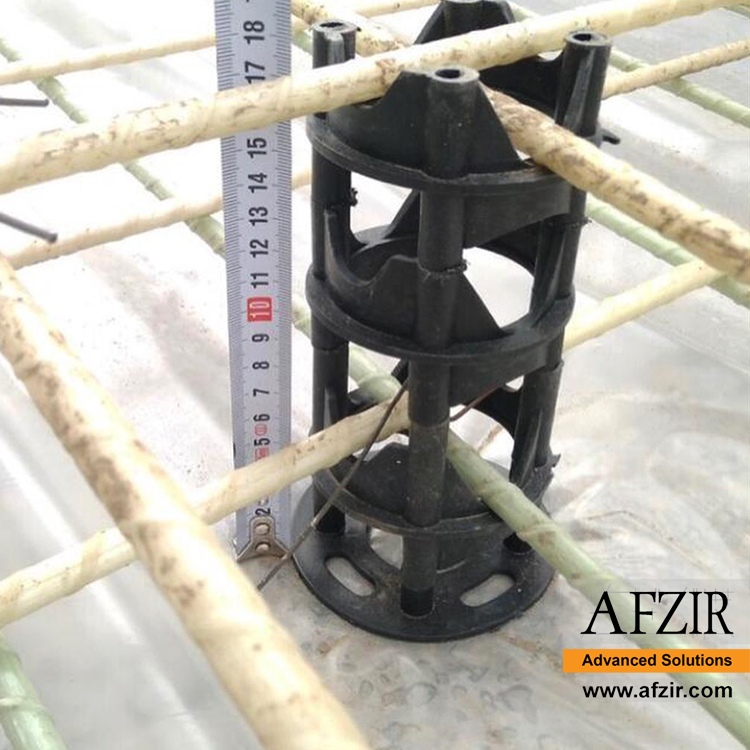
Preventing premature structural degradation in marine overpasses requires non-corrosive reinforcement materials. Incorporating durable GFRP composite rebar into concrete deck slabs eliminates rust expansion stresses and extends service life
The excellent combination of FRP glass fibers and Vinyl ester( PVC) resin leads to the construction of this rebar. The most common use of FRP glass reinforcement or FRP fiberglass rebar is in the manufacture of concrete slabs.
Among the most important capabilities of GFRP or composite reinforcement rebars are high strength, heat resistance, low deformation at the moment of rupture and low weight. Among FRP rebars, FRP fiberglass reinforcement is the cheapest type.
For information on how to sell and the price of fiberglass rebar, please contact Afzir Retrofitting Company.
Due to the high resistance of FRP materials against corrosion, this material is also made as FRP rebar. At present, there are several factories that produce FRP fiberglass rebars that can be supplied by Afzir Company as a GRRTM in Iran.
Since the first use of rebar in concrete in 1893, one of the issues that affect the durability of concrete and structures is the corrosion of concrete and rebar. In Montreal, Canada, for example, the Laval overpass was destroyed in 2006 by corrosion and over-aging of the structure; One of the suggested options to prevent such failures is to use GFRP composite rebar. With the advancement of technology in the field of polymers, new rebars have emerged called FRP glass rebars or GFRP composite rebars that have good corrosion resistance. In addition to being very suitable for new structures, this product can also be used to improve old structures.
GFRP was first used in the construction industry in the mid-1930s. At that time, it was mostly used for its beauty and architectural properties. But in 1967, its extraordinary properties in the construction industry were accidentally discovered in the demolition of the “House of the Future” building at Disneyland. Between 1956 and 1957, the future home was built using GFRP composite. But then, due to the lack of need for that structure, it was decided to demolish it. Finally, in 1967, the demolition operation began. An interesting thing happened in this operation, which was carried out using the ball of destruction. The ball bent into FRP or GFRP composite glass rebars and changed direction. While in buildings with steel rebars, the ball easily destroyed them. After this incident, the capabilities of FRP glass rebars or GFRP composite rebars were gradually discovered. In 1994, composite materials were used in the construction industry for nearly 600 million.
GFRP rebar is a non-uniform material. But what exactly is GFRP rebar? The structure of this reinforcement consists of FRP and coating. The Heterogeneity of the rebars is due to the Heterogonous behavior of the FRP. FRP glass fibers are bonded between matrices of polyester, epoxy, Vinyl ester( PVC) or urethane. Vinyl ester are commonly used as resins or coatings in GFRP composite rebars. If the tension is applied vertically to the fibers, the rebar will show good strength. In the horizontal direction this resistance is very small. In FRP or GFRP composite glass fiber rebars and in polymer reinforcement in general, both FRP material and the surrounding matrix play an important role. Of course, this incompatible behavior is sometimes problematic. In cases where shear force occurs in the rebar, its performance is questioned.
The behavior of GFRP rebars is not similar to the behavior of steel rebars. These materials have a linear elastic behavior from the moment of loading to rupture. This is one of the advantages of GFRP rebars because any deformation in the rebar is reversible.
The modulus of elasticity of GFRP composite rebar is about 35 to 51 MPa. Also, these materials are not malleable. GFRP glass does not show Plastic behavior and choking like steel rebar. Also, GFRP rebar has a completely elastic behavior and breaks after reaching its final strength. At the moment of rupture, GFRP rebars and its resin are ruptured together.
The breaking temperature of FRP glass for FRP glass reinforcement or GFRP composite is about 120 degrees Celsius. At this temperature, the shear, compressive and tensile strength of the resin is lost. This temperature decreases with water absorption.
In general, the most important reasons for using GFRP can be summarized as follows:
In some places, the structural designer may intend to use the plastic property of steel rebars. In such a case, since the FRP fiberglass reinforcement does not deform much before rupture, their use is not very appropriate or the designer must change the design of his structure.
Also another problem of FRP fiberglass reinforcement is their weakness against heat. In this case, the resin around the FRP fiberglass reinforcement opens and as a result, heat causes them to lose their strength.
packaging
Product color
| Tensile strength |
650-700 MPa |
| Modulus of elasticity |
55 GPa |
| elongation |
1.5% |
|
Fiber volume fraction |
70% |
|
Matrix type |
Epoxy resin, vinyl ester |
Afzir Company offers you a wide range of GFRP rebars for many applications including retrofitting projects.

Reviews
There are no reviews yet.