


Products
Here are some of our GFRP Products:
• Unidirectional Glass Fiber 400 gr
• Unidirectional Glass Fiber 880 gr
• Biaxial Glass Fiber 200 gr
• Biaxial Glass Fiber 400 gr
• Biaxial Glass Fiber 600 gr
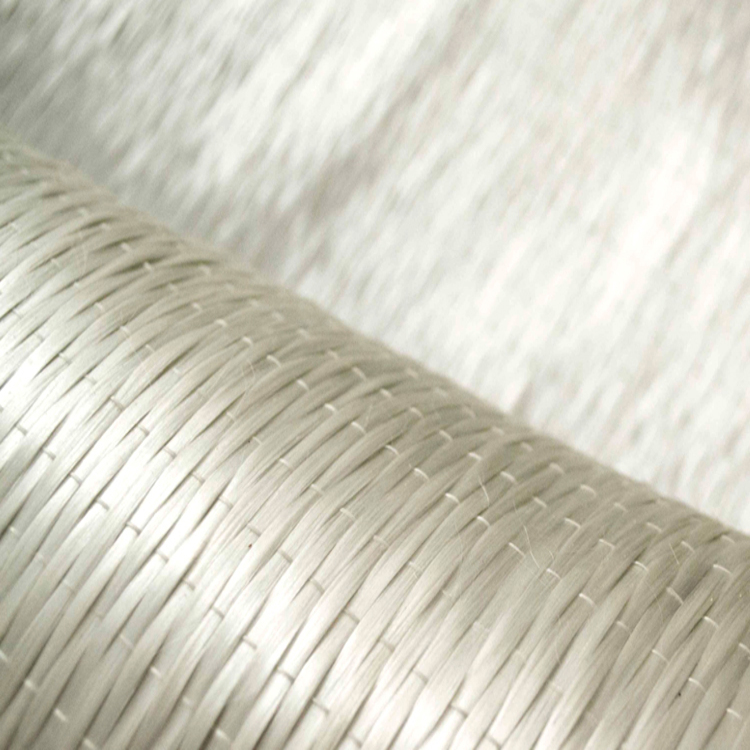
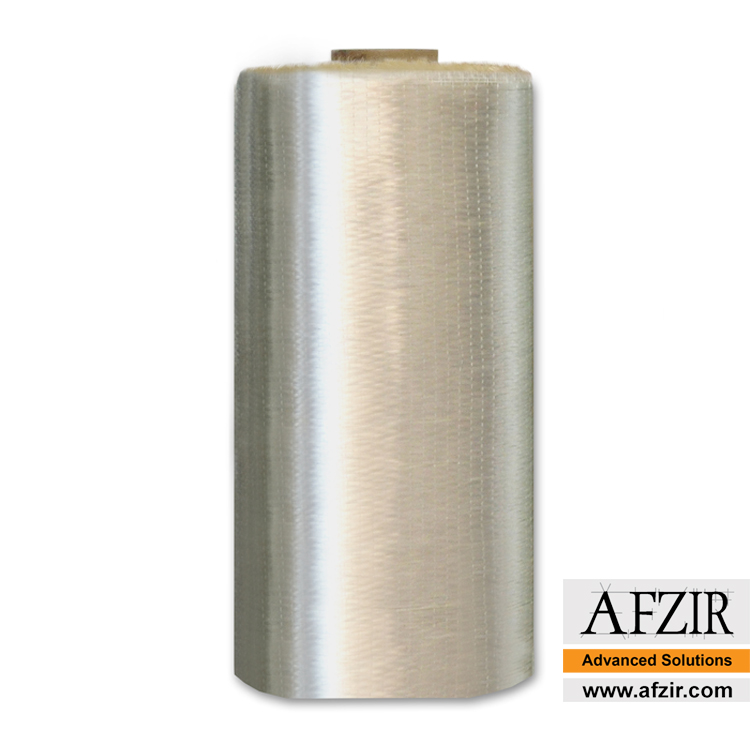
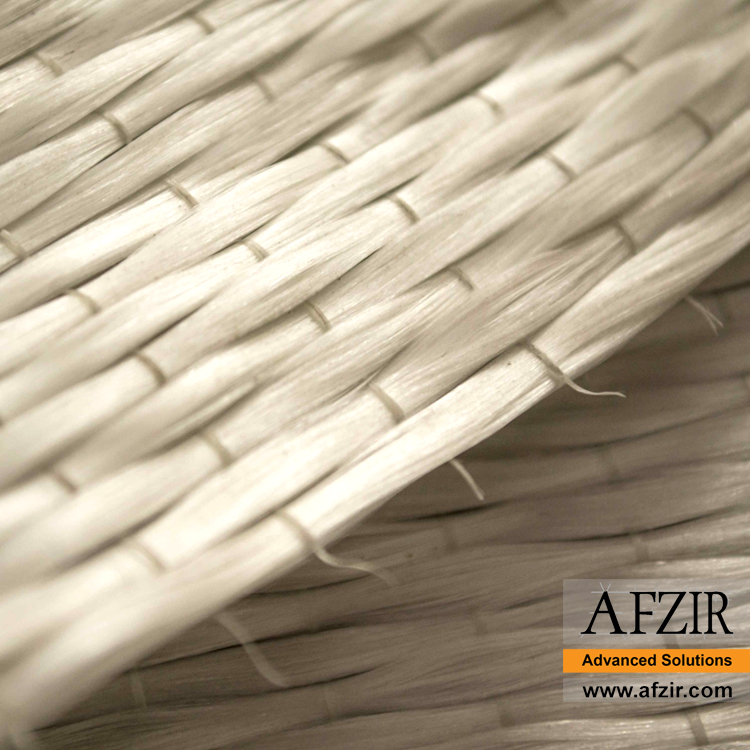
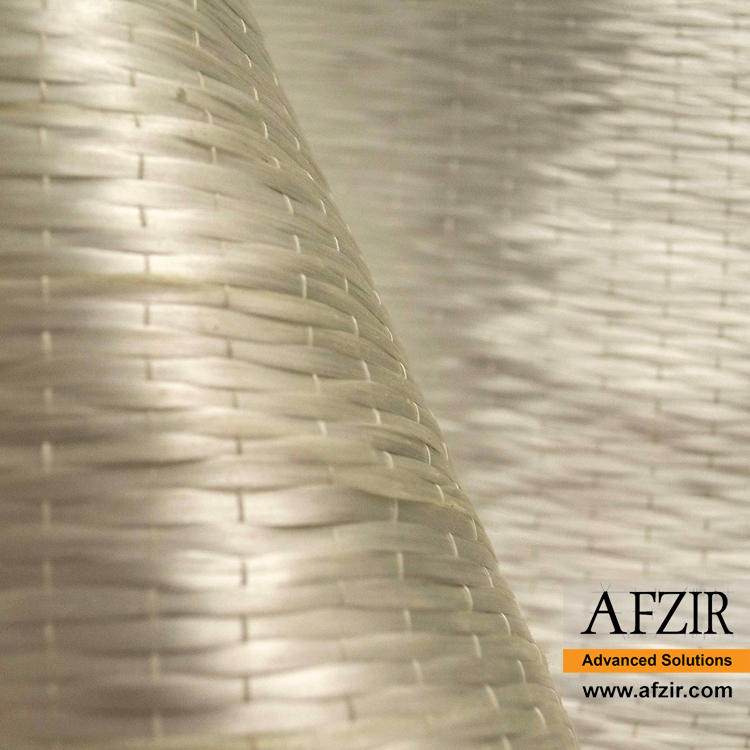
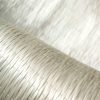
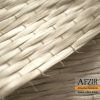
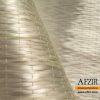
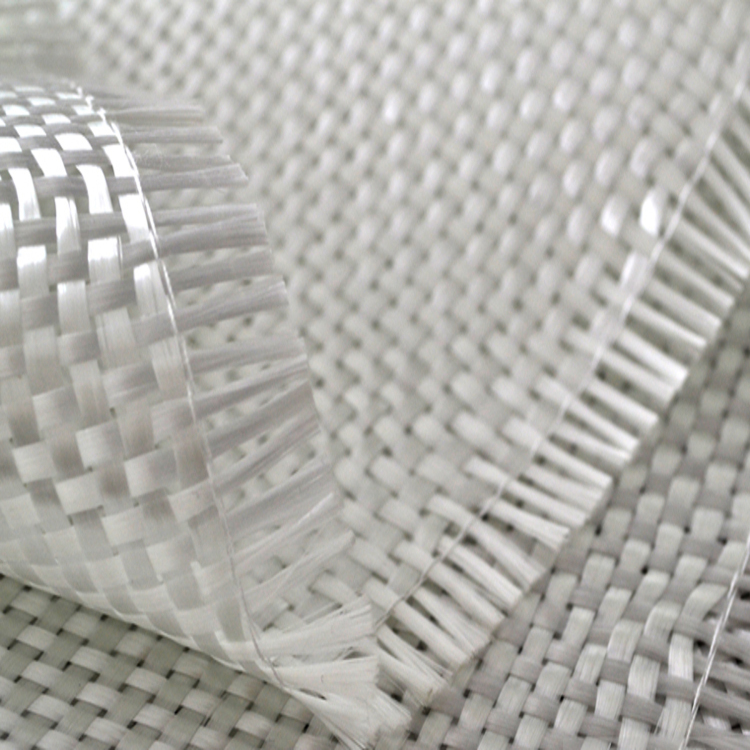
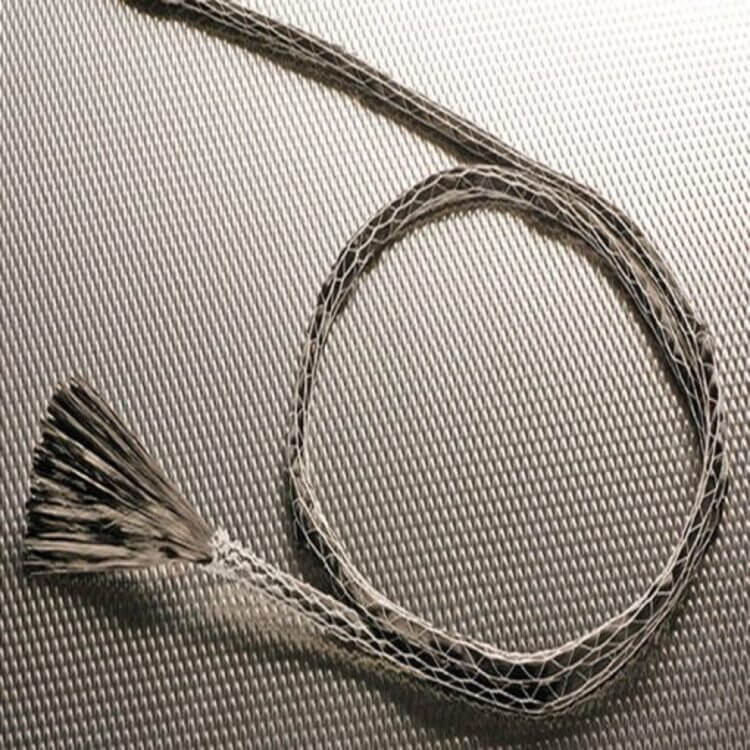
Unidirectional fiberglass (UGW™ code) is a type of fiberglass known for its low specific density and high strength. Its defining characteristic is its one-direction texture, with all fibers running parallel in a non-woven manner. UD Glass Wrap, UD an abbreviation for Unidirectional, is made up of thin strands of glass fibers and is commonly used in GFRP glass composites for retrofitting concrete structures. While UD glass fibers have lower mechanical and tensile strength compared to unidirectional carbon fibers, they are still reasonably priced, resulting in higher sales for glass fibers over carbon fibers.
Fiberglass refers to fiber-reinforced polymers that utilize glass fibers as the reinforcing material. The glass fibers can be arranged differently, such as random placement, flattened into a sheet (chopped strand mat), or woven into a fabric. The plastic matrix in these composites can be a thermoset polymer, typically based on epoxy, polyester resin, vinyl ester, or a thermoplastic material.
Glass fibers are the predominant fibers used in the FRP (Fiber-Reinforced Polymer) industry. UD Glass Wrap is a high-strength glass fabric with fibers oriented in the 0° direction. E-glass fibers are the most widely used in the textile industry and for composite materials and are present in 90% of retrofitting systems. They offer high electrical insulation properties, good thermal resistance, and are cost-effective. S-Glass fibers have higher thermal resistance and about one-third higher tensile strength than E-glass fibers. Specialty AR-glass fibers are specifically resistant to the alkaline environment found in concrete but come at a higher cost.
Structural retrofitting of aging concrete columns requires durable non-corrosive reinforcement materials. Applying a high-strength unidirectional glass fiber wrap increases load-bearing capacity and effectively delays micro-crack growth
UD Glass Wrap is lightweight, strong, and less brittle. One of the main advantages of fiberglass is its ability to be molded into complex shapes, which explains its wide use in applications such as bathtubs, boats, aircraft, roofing, and more.
Mechanical strength: Fiberglass has higher specific resistance than steel, making it suitable for high-performance applications.
Electrical characteristics: Fiberglass is an excellent electrical insulator even at low thicknesses.
Incombustibility: Being a mineral material, fiberglass is naturally non-combustible, does not support flame propagation, and does not emit smoke or toxic products when exposed to heat.
Dimensional stability: Fiberglass has a low linear expansion coefficient and is not sensitive to temperature and humidity changes.
Compatibility with organic matrices: Fiberglass can be combined with various synthetic resins and mineral matrices like cement.
Non-rotting: Fiberglass does not rot and is resistant to damage caused by rodents and insects.
Thermal conductivity: Fiberglass exhibits low thermal conductivity, making it highly useful in the building industry.
Dielectric permeability: Fiberglass is suitable for electromagnetic windows due to its dielectric properties.
In the construction industry, unidirectional glass fibers are used in precast concrete to delay crack growth and enhance structural integrity. The demand for glass fibers has increased due to their excellent crack resistance, bearing capacity, and tensile strength. Glass fiber-reinforced composites (GFRCs) are used in construction and infrastructure projects to address corrosion issues and reinforce damaged beams, columns, bridges, and other structures.
Fiberglass also plays a significant role in the automotive industry thanks to its high strength-to-weight ratio. Unidirectional GFRPs are utilized as lightweight, high-strength materials in various vehicle components. The dimensional stability, impact resistance, and thermal properties of glass fibers contribute to producing electric vehicles with improved capabilities, strength, fuel efficiency, and extended range.
Furthermore, fiberglass offers numerous advantages in the automotive industry. Its higher strength-to-weight ratio is crucial in automobile manufacturing, allowing lightweight designs without compromising structural integrity. Unidirectional glass fiber-reinforced plastics (GFRPs) are employed in different parts of vehicles, taking advantage of their lightweight nature and high strength. These materials enhance dimensional stability during manufacturing and provide excellent impact and thermal resistance.
The use of fiberglass in automotive applications has several benefits. Firstly, it helps reduce vehicles’ overall weight, improving fuel efficiency and reducing emissions. Additionally, fiberglass components exhibit higher durability and resistance to corrosion, making them suitable for various environmental conditions. The versatility of fiberglass allows for the production of complex shapes and designs, enabling automotive manufacturers to create streamlined and aerodynamic structures.
Moreover, fiberglass contributes to the ongoing trend of electric vehicles (EVs). Due to its lightweight properties, fiberglass helps offset batteries’ weight in EVs, enabling longer driving ranges and increased energy efficiency. Additionally, the electrical insulation properties of fiberglass make it an ideal material for components in electric vehicles, ensuring safety and optimal performance.
The automotive industry continues to explore innovative ways to incorporate fiberglass and other advanced materials into vehicle manufacturing. The ongoing research and development efforts aim to enhance automobiles’ performance, efficiency, and sustainability, further driving the adoption of fiberglass as a critical material in this sector.
packaging
Product color
|
Arial Weight |
200-880 gr/m² |
| Fabric Thickness |
0.16-0.34 mm |
|
Weave Pattern |
unidirectional |
|
Primary Fiber Direction |
0° (UD) |
|
Width (mm) |
50-100 mm |
| color |
white |
|
Comparison of properties of UD Glass Wrap with conventional construction steel |
||
|
parameter |
unidirectional fiber |
steel |
|
Tensile Strength |
2200 MPa |
360 MPa |
|
Tensile Modulus |
70 GPa |
200 GPa |
| Density | 2550 Kg/m³ |
7850 Kg/m³ |
| Corrosion resistance | Yes |
No |
| Acid resistance | Yes |
No |
Here are some of our GFRP Products:
• Unidirectional Glass Fiber 400 gr
• Unidirectional Glass Fiber 880 gr
• Biaxial Glass Fiber 200 gr
• Biaxial Glass Fiber 400 gr
• Biaxial Glass Fiber 600 gr
Reviews
There are no reviews yet.