





Products
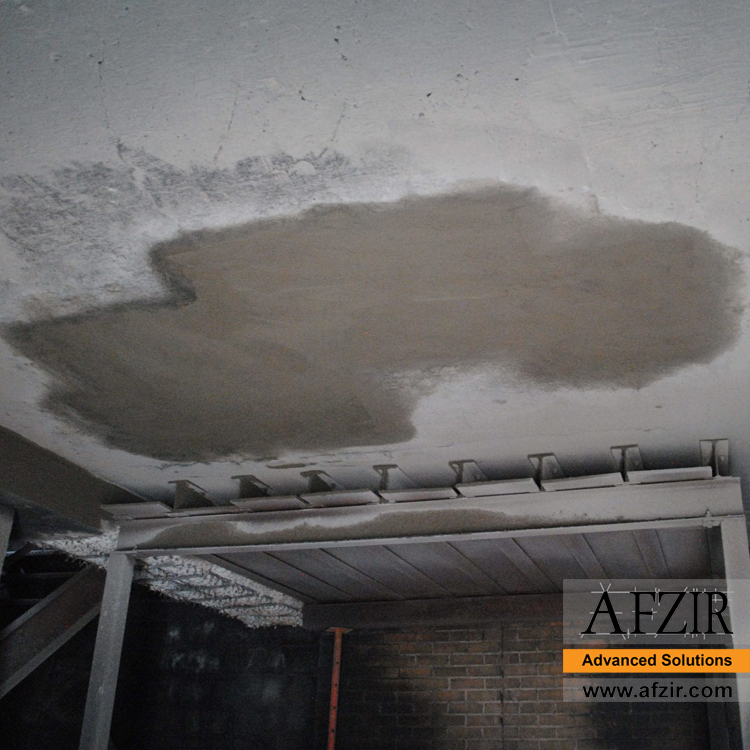
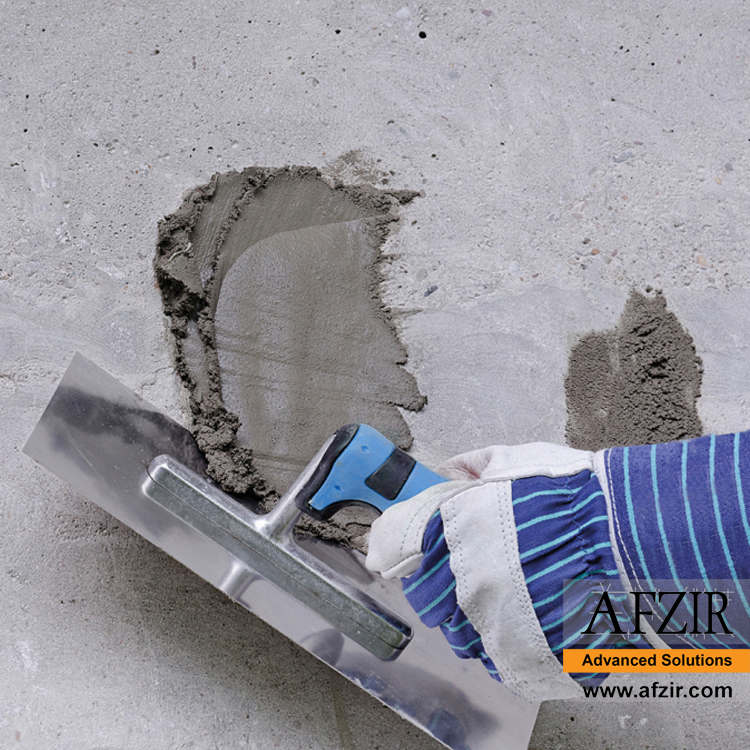
Afzir Company will provide you concrete resurfacing solutions with concrete repairing mortars.
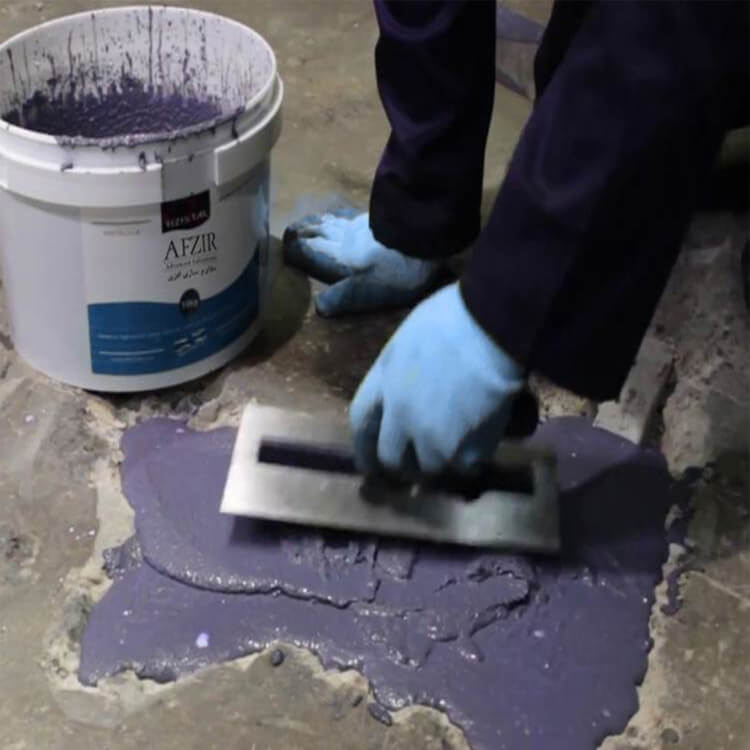
The Polymer-Modified Repair Mortar (PRM™ 400 code) is a two-component mortar consisting of powder and polymer liquid. It offers excellent performance and efficiency, requiring minimal additional steps after application. This type of concrete repair mortar exhibits superior mechanical characteristics and fast-setting properties compared to one-component polymer-based restoration mortar.
Repair mortar possesses a strength equivalent to or greater than concrete’s and exhibits fast setting and strong adhesion to concrete surfaces. It is primarily used for repairing damaged and weakened areas in concrete structures.
Concrete is renowned for its strength and durability, enabling the construction of heavy and high-rise structures. However, even these materials are not resistant to defects and require periodic repairs and reconstruction throughout their lifespan. Effective strategies during the repair and rebuilding of concrete are crucial, as they can mean the difference between successful restoration and costly failures.
The Polymer Concrete Repair Mortar (PRMTM400) from Afzir Company is part of a range of repair mortars designed to address concrete repairs. This polymer concrete mortar is a potent inhibitor against erosion and corrosion, offering versatile usage in horizontal and vertical structures.
With its modified composition, polymer concrete mortar enhances the capabilities of concrete in various construction structures such as industrial warehouses, parking lots, and roads, improving their resistance to heavy loads and abrasions.
Concrete damage can occur due to various factors, including execution errors and environmental conditions. Execution-related damage includes issues like honeycombing, inadequate cleaning of formwork, improper formwork execution leading to joint formation, and displacement of molds. Damage arising from environmental conditions and operation can result from exposure to corrosive substances, loss of concrete cover, and the subsequent appearance of rebar, necessitating the use of concrete repair materials.
Identifying the different types of concrete damage often requires concrete testing, as they may not be visible to the naked eye.
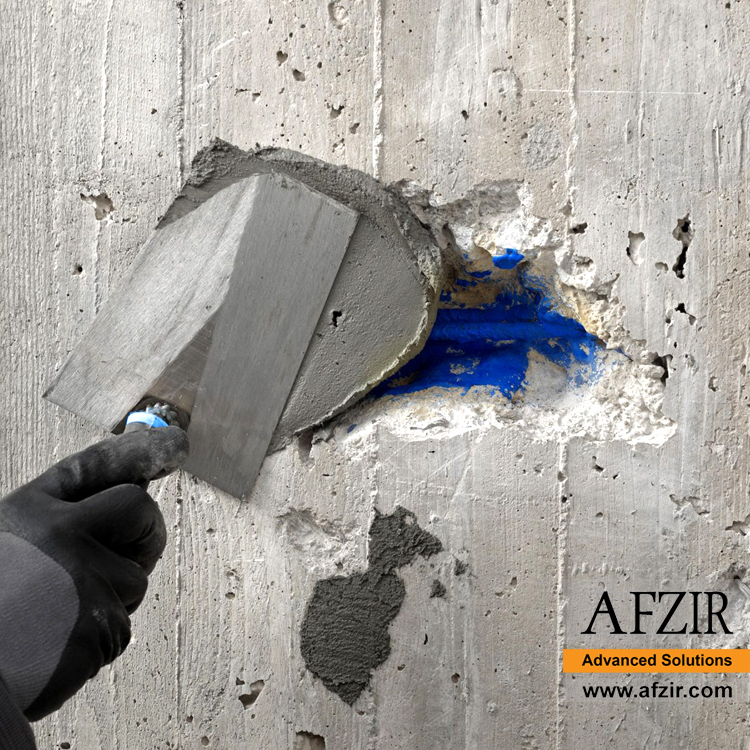
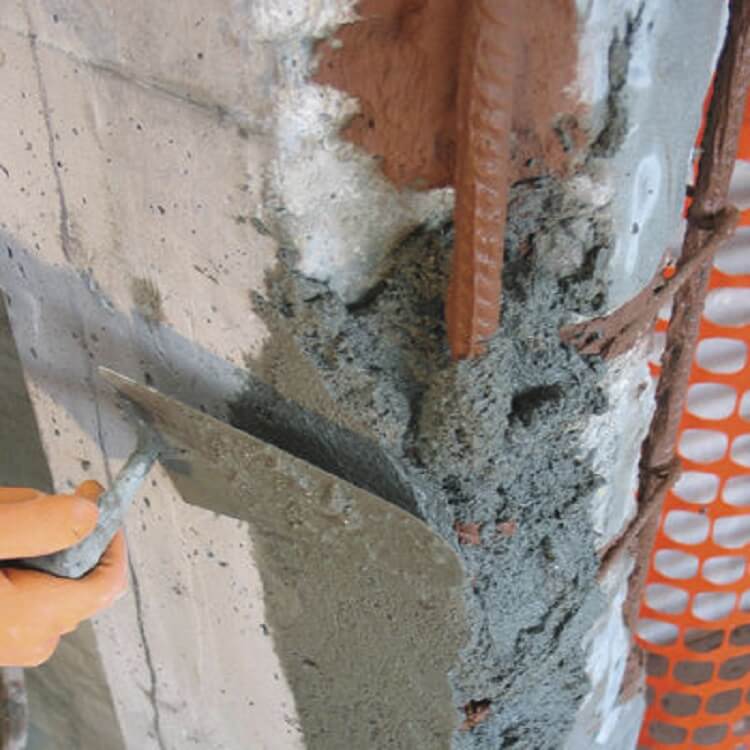
The most suitable method for repairing concrete in a structure depends on the required thickness of the repair mortar layer. Two approaches exist for repairing mortar layers less than 5 cm thick. The first method involves manually spraying the prepared concrete surface with mortar or using a specialized spraying device (shotcrete). The second method employs a spatula to repair the damaged area.
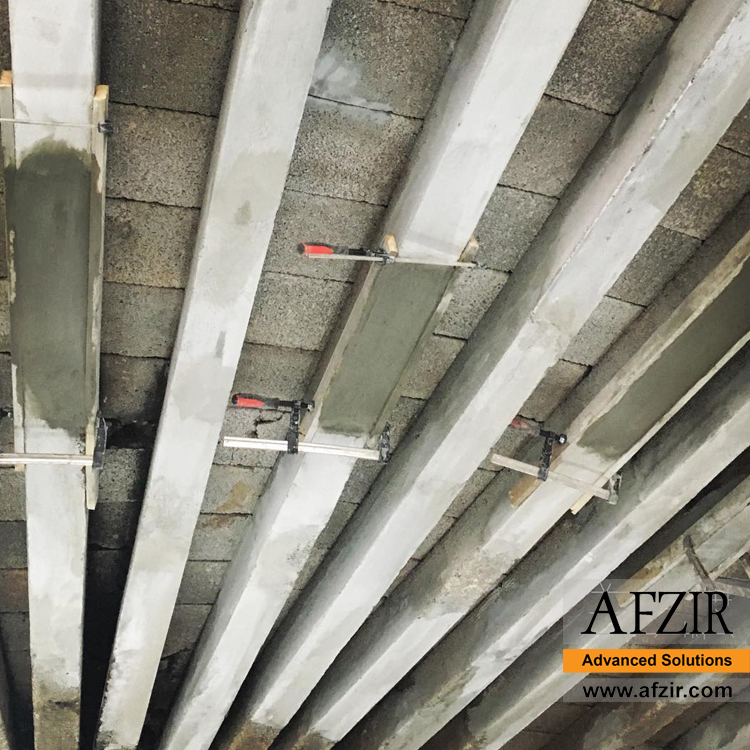
For repair mortar layers thicker than 5 cm, the process involves preparing the concrete surface, creating formwork, and subsequently applying the repair mortar to the concrete surface.
In addition to considering the required thickness of the repair mortar layer, the execution conditions and the location of the repair (e.g., beam, roof, column) play a significant role in selecting the appropriate execution method.
Concrete repair and reinforcement are integral parts of a comprehensive construction process, requiring meticulous planning and strategy. Assessing project conditions, understanding the type and cause of concrete failure, and gathering information about the structure’s usage conditions are essential for formulating a successful repair plan. Failures such as cracking, scaling, leakage, wear, subsidence, deflection, and disintegration can lead to concrete failure and structural damage. A sound technical understanding of concrete failure types at the project level is necessary to use polymer concrete mortar or any other repair method effectively. This enables the creation of a successful repair strategy and selecting the appropriate concrete repair method based on the identified causes of failure.
The global market for concrete repair mortar production and usage is continuously expanding, with thermal polymer mortar witnessing significant growth in this field. In 2012, the market value of concrete repair mortars was estimated at $2 billion, and it is projected to reach $3.6 billion by 2027. The market’s growth rate for various types of concrete repair mortars exceeds 7% annually.
Several factors contribute to the development of the market, including population growth, increased infrastructure demands, and the necessity to extend the lifespan of existing buildings. As concrete has been utilized in construction for nearly a century, numerous deteriorating structures require major repairs. The global demand for ready-mixed concrete repair mortars, particularly polymer-based options, drives market visibility and inevitably affects the price of concrete repair mortar. Afzir Company, a prominent player in the concrete repair mortar industry, is actively engaged in selling high-quality concrete repair mortars. Customers and contractors can easily inquire about the required materials and prices for various types of concrete mortar by contacting the company’s experts with a phone call.
Concrete is renowned for its strength and durability, enabling the construction of heavy and high-rise structures. However, even these materials are not resistant to defects and require periodic repairs and reconstruction throughout their lifespan. Effective strategies during the repair and rebuilding of concrete are crucial, as they can mean the difference between successful restoration and costly failures.
The Polymer Concrete Repair Mortar (PRMTM400) from Afzir Company is part of a range of repair mortars designed to address concrete repairs. This polymer concrete mortar is a potent inhibitor against erosion and corrosion, offering versatile usage in horizontal and vertical structures.
With its modified composition, polymer concrete mortar enhances the capabilities of concrete in various construction structures such as industrial warehouses, parking lots, and roads, improving their resistance to heavy loads and abrasions.
Concrete damage can occur due to various factors, including execution errors and environmental conditions. Execution-related damage includes issues like honeycombing, inadequate cleaning of formwork, improper formwork execution leading to joint formation, and displacement of molds. Damage arising from environmental conditions and operation can result from exposure to corrosive substances, loss of concrete cover, and the subsequent appearance of rebar, necessitating the use of concrete repair materials.
Identifying the different types of concrete damage often requires concrete testing, as they may not be visible to the naked eye.
The most suitable method for repairing concrete in a structure depends on the required thickness of the repair mortar layer. Two approaches exist for repairing mortar layers less than 5 cm thick. The first method involves manually spraying the prepared concrete surface with mortar or using a specialized spraying device (shotcrete). The second method employs a spatula to repair the damaged area.
For repair mortar layers thicker than 5 cm, the process involves preparing the concrete surface, creating formwork, and subsequently applying the repair mortar to the concrete surface.
In addition to considering the required thickness of the repair mortar layer, the execution conditions and the location of the repair (e.g., beam, roof, column) play a significant role in selecting the appropriate execution method.
Concrete repair and reinforcement are integral parts of a comprehensive construction process, requiring meticulous planning and strategy. Assessing project conditions, understanding the type and cause of concrete failure, and gathering information about the structure’s usage conditions are essential for formulating a successful repair plan. Failures such as cracking, scaling, leakage, wear, subsidence, deflection, and disintegration can lead to concrete failure and structural damage. A sound technical understanding of concrete failure types at the project level is necessary to use polymer concrete mortar or any other repair method effectively. This enables the creation of a successful repair strategy and selecting the appropriate concrete repair method based on the identified causes of failure.
The global market for concrete repair mortar production and usage is continuously expanding, with thermal polymer mortar witnessing significant growth in this field. In 2012, the market value of concrete repair mortars was estimated at $2 billion, and it is projected to reach $3.6 billion by 2027. The market’s growth rate for various types of concrete repair mortars exceeds 7% annually.
Several factors contribute to the development of the market, including population growth, increased infrastructure demands, and the necessity to extend the lifespan of existing buildings. As concrete has been utilized in construction for nearly a century, numerous deteriorating structures require major repairs. The global demand for ready-mixed concrete repair mortars, particularly polymer-based options, drives market visibility and inevitably affects the price of concrete repair mortar. Afzir Company, a prominent player in the concrete repair mortar industry, is actively engaged in selling high-quality concrete repair mortars. Customers and contractors can easily inquire about the required materials and prices for various types of concrete mortar by contacting the company’s experts with a phone call.
packaging
Product color
| Compressive strength |
28.5 MPa |
| tensile strength |
5.51 MPa |
| flexural strength |
8.27 MPa |

Afzir Company will provide you concrete resurfacing solutions with concrete repairing mortars.


Reviews
There are no reviews yet.